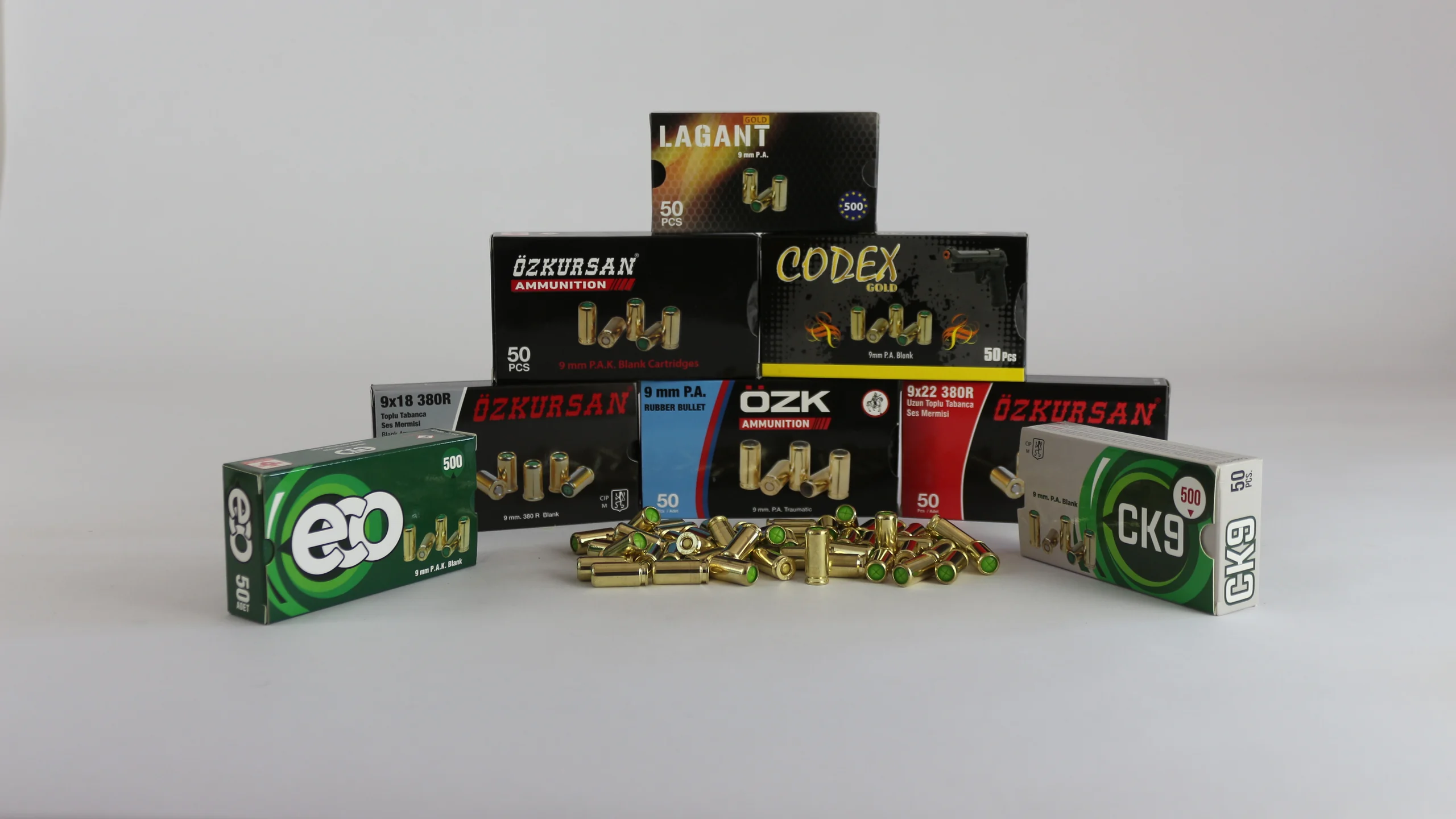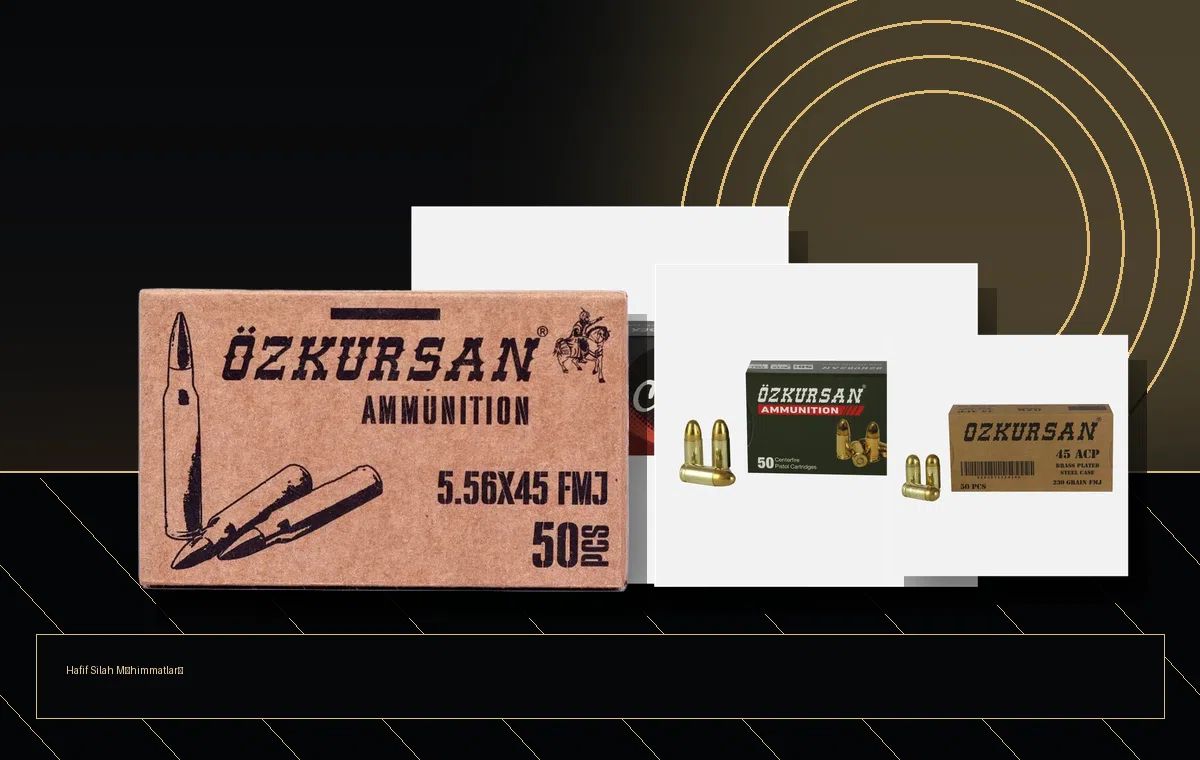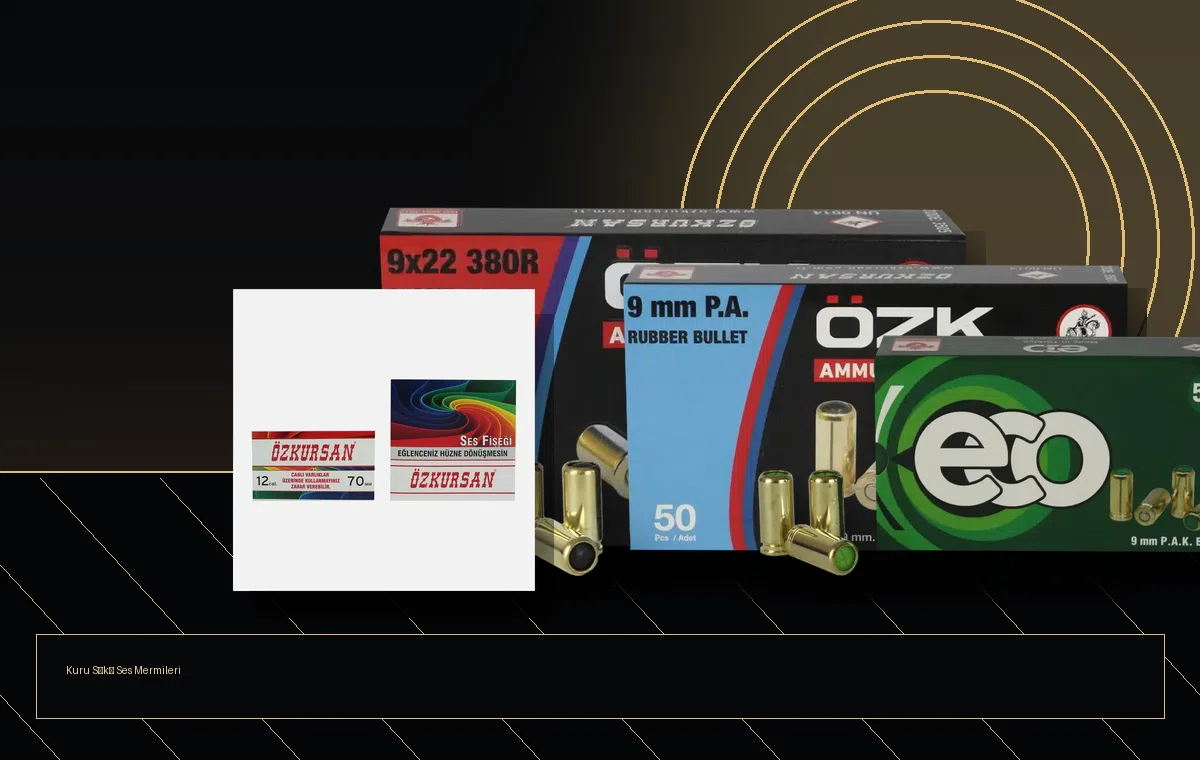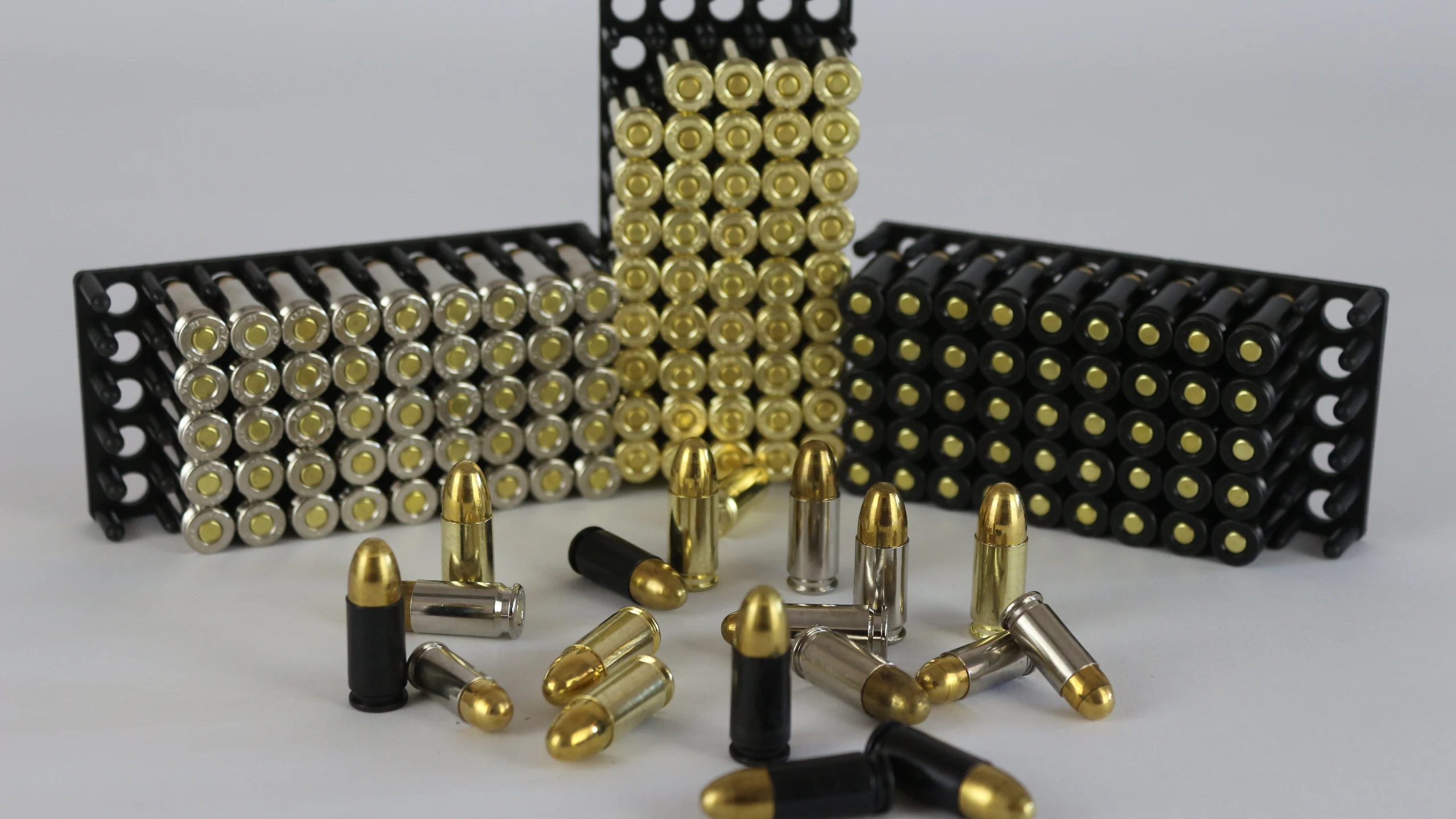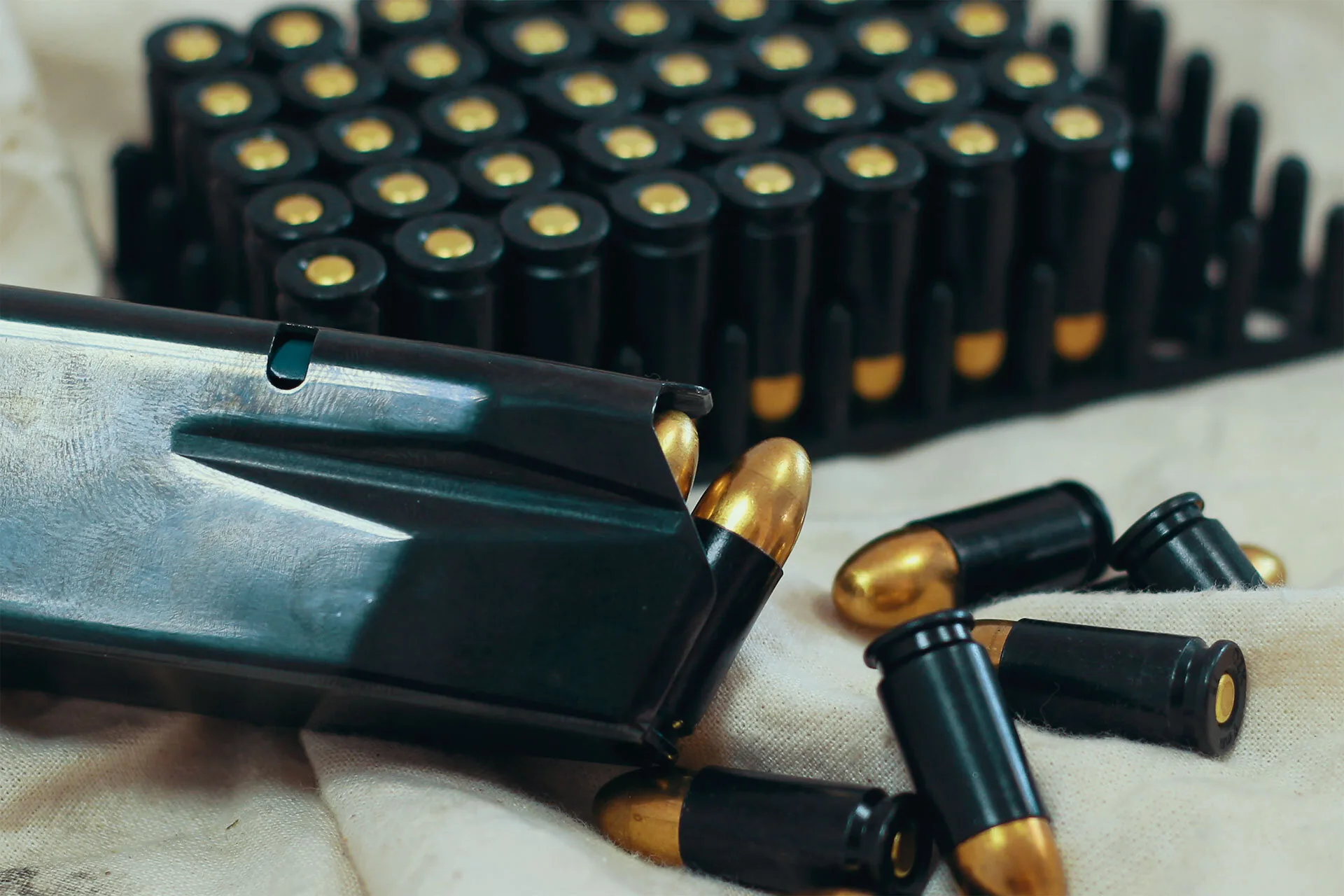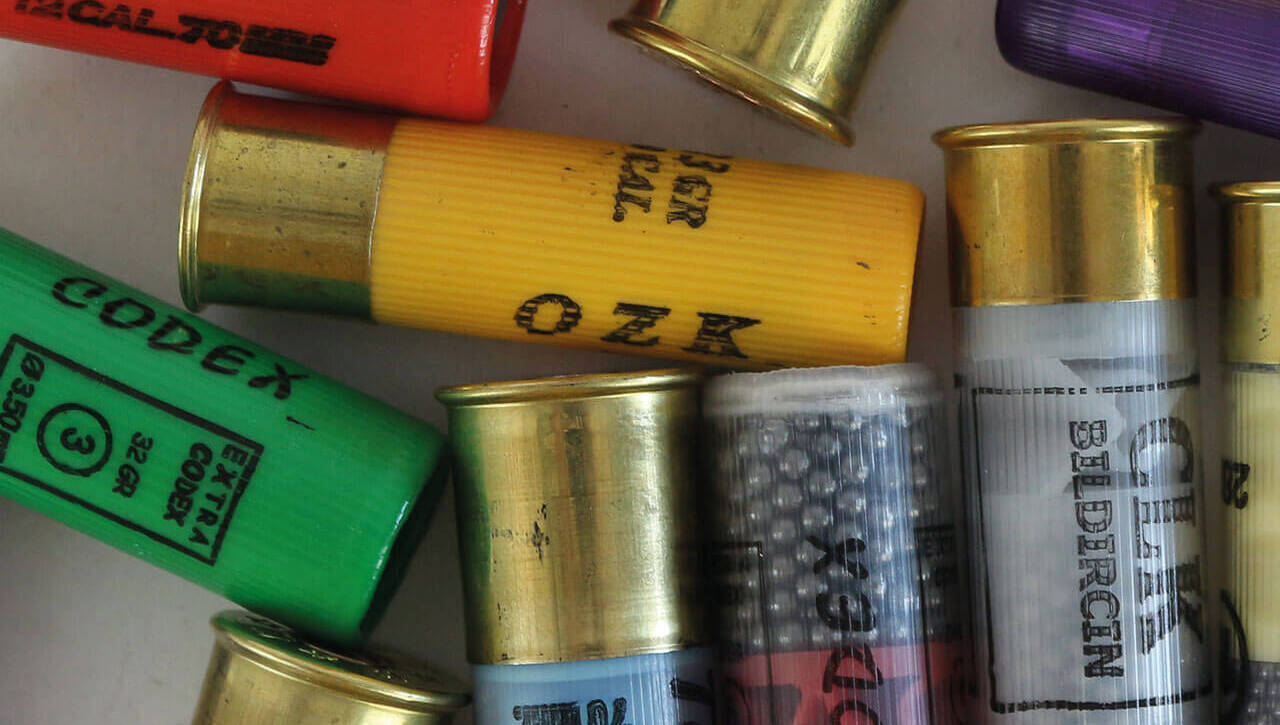
The case is the metal body that holds the primer, propellant and bullet together and withstands the pressure generated at the moment of firing. The Ozkursan catalog states case material separately for each product, and three main types appear: steel, brass, and nickel/brass-plated steel.
Case selection is not a matter of appearance alone; the material's hardness, flexibility and corrosion resistance directly affect the product's shelf life and feeding behaviour in the firearm.
What Does the Case Do?
The case holds the propellant ignited by the primer, channels the resulting gas pressure toward the barrel, and is then safely ejected from the firearm after firing. The hardness and flexibility of the case material determine how safely it withstands this pressure.
At the moment of firing, the case briefly expands and seals against the chamber walls, preventing gas from escaping backward; it then returns close to its original size as pressure drops. This behaviour is called "obturation" and is directly related to the flexibility of the case material.
Steel Cases
Most pistol cartridges in the catalog use a steel case. Examples include 45 ACP Brass Plated (230 grain, steel case), Ozkursan 380 ACP (100 grain, steel case) and Ozkursan Rifle Ammunition (5.56x45 mm, steel case).
Steel is harder and less flexible than brass, so steel cases are generally not considered suitable for reloading and are manufactured for single use. In exchange, production cost is lower than brass.
Brass Cases
Brass cases appear in the catalog particularly in the 9x19 mm Parabellum line. Examples include Ozkursan Parabellum (124 grain, brass case), Codex Parabellum (124 grain, brass case) and Ozkursan Luger Brass (115 grain, brass case).
Brass is a more flexible alloy than steel; this flexibility allows the case to separate more easily from the chamber after firing and supports reloading, a practice common in many markets.
Nickel/Brass-Plated Steel Cases
Some steel cases are plated with nickel or brass to improve corrosion resistance and feeding performance. This group includes Codex Plinking Nickel Plated Steel (115 grain) and Lagant Black Plated Steel (124 grain).
The plating layer reduces surface friction, easing feeding and ejection inside the firearm, while providing added protection against moisture and oxidation.
Case Type by Product
| Product | Calibre | Case Type | Grain |
|---|---|---|---|
| Ozkursan Rifle Ammunition | 5.56x45 mm | Brass-Plated Steel | 55 |
| Ozkursan Luger | 9x19 mm | Brass-Plated Steel | 124 |
| Poligon Luger | 9x19 mm | Nickel-Plated Steel | 124 |
| Codex Plinking | 9x19 mm | Nickel-Plated Steel | 115 |
| Ozkursan Parabellum | 9x19 mm | Brass | 124 |
| Codex Parabellum | 9x19 mm | Brass | 124 |
| Ozkursan Luger Brass | 9x19 mm | Brass | 115 |
| 45 Cal Steel Case | 45 ACP | Steel | 230 |
| Ozkursan 380 ACP | 9x17 mm | Steel | 100 |
| Ozkursan 7.65 | 7.65x17 mm | Steel | 70 |
Why Case Type Matters
Case material affects a firearm's feeding behaviour, post-firing ejection, and to some extent the cartridge's cost structure. Steel cases generally offer a harder, more economical production route, while brass cases offer a more flexible structure.
For the effect of case material on pressure and velocity, see Muzzle Velocity and Pressure; for primer compatibility, see Boxer Primers — both components combine with the case to form the complete cartridge.
Case length is part of a calibre's definition: for example, the "19" in 9x19 mm is the case length in millimetres. Calibres such as 7.65x17 mm and 9x17 mm use a shorter case, while 9x19 mm uses a longer one; a longer case can generally accommodate more propellant.
Case wall thickness and internal diameter are inspected under Ozkursan's ISO 9001:2015-certified quality management system during production, since an out-of-specification case could push firing pressure outside safe limits.
Frequently Asked Questions
Does a steel case rust?
An unplated steel case is prone to oxidation in humid conditions, which is why most steel-cased products in the catalog are manufactured with a nickel or brass plating.
Why are both steel and brass cases produced in the same calibre?
The two materials offer a different cost-performance balance; in the 9x19 mm line, for example, both the steel-cased Ozkursan Luger and the brass-cased Ozkursan Parabellum are listed under separate product codes.
Does case type affect firearm compatibility?
Case type generally does not change firearm compatibility — calibre dimensions are the determining factor — though feeding performance in some automatic firearms can vary slightly with case surface friction.
Review product categories, the catalog and corporate inquiry options for current Ozkursan information.