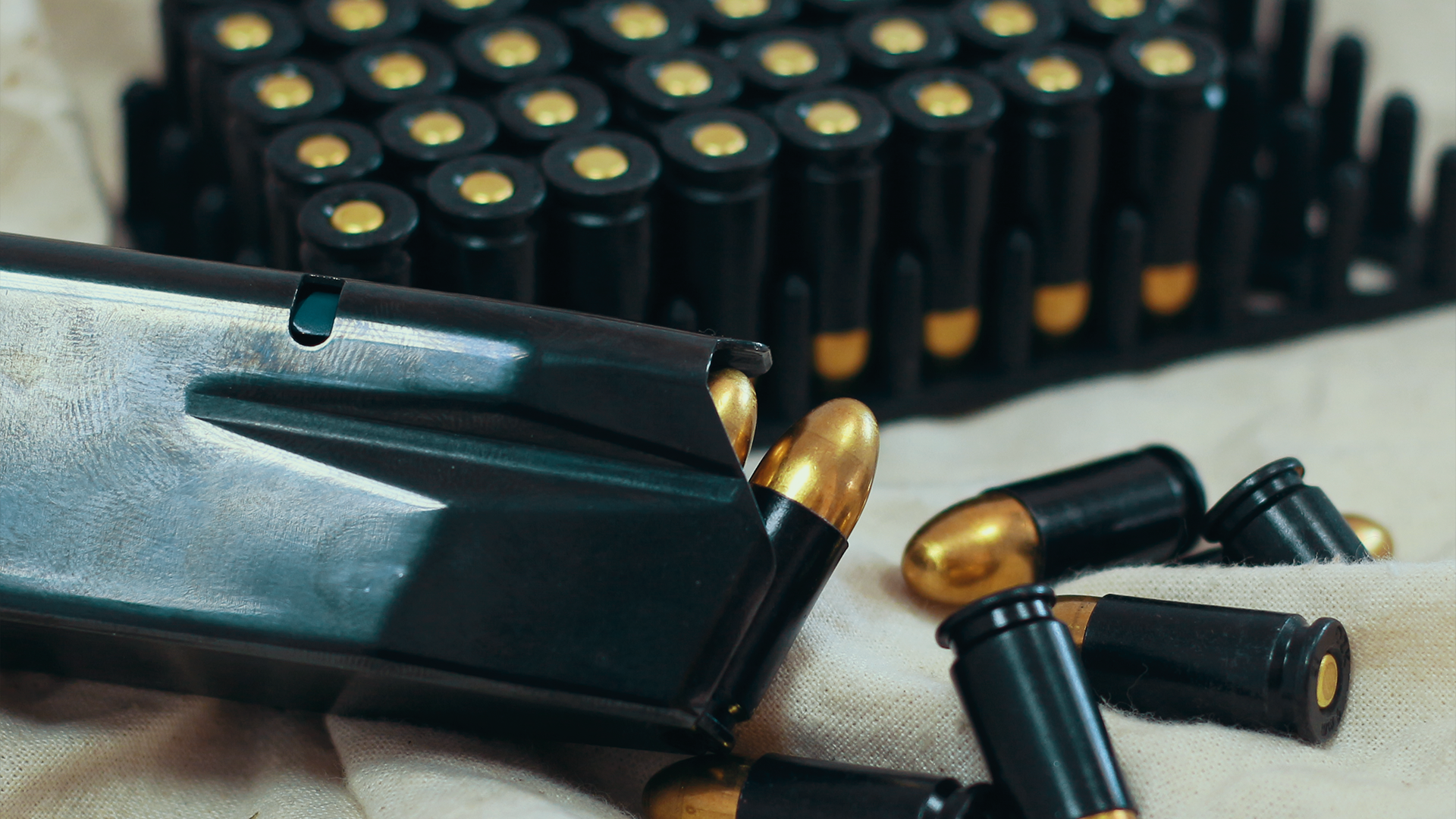
Muzzle velocity (V0) and pressure are the two most decisive figures in a cartridge's technical profile. Ozkursan measures and records both values separately for every product, alongside calibre and shot or bullet weight, and this page compares real m/s and bar data drawn directly from the catalog.
Velocity and pressure are often confused, yet they measure different physical quantities — a cartridge's performance can only be assessed when both are read together.
What Is Muzzle Velocity (V0)?
Muzzle velocity is the speed of the shot charge or bullet at the moment it leaves the barrel, expressed in metres per second (m/s). Catalog figures for 12-gauge hunting cartridges and slug loads both fall in the 400-440 m/s range.
Muzzle velocity is directly linked to the pressure curve inside the barrel: the faster the propellant burns and the more gas it generates, the higher the velocity at the muzzle.
What Is Pressure (Bar)?
Pressure is the gas pressure generated by propellant combustion inside the case, which drives the shot or bullet forward; it is measured in bar. Two cartridges with the same muzzle velocity can carry different pressure values — a difference linked to wad material and shot weight.
Pressure is also a safety parameter: every firearm and case is designed around a defined maximum pressure, so the pressure figures in the catalog are also an indicator of product safety.
Catalog Comparison: Velocity and Pressure
The table below compares muzzle velocity and pressure across the Ozkursan hunting and shooting cartridge range.
| Product | Calibre | Muzzle Velocity | Pressure |
|---|---|---|---|
| Codex 12 Cal. 28 g. | 12 Cal. | 410 m/s | 570 bar |
| Codex 12 Cal. 36 g. | 12 Cal. | 400 m/s | 675 bar |
| Ozkursan Classic 12 Cal. 28 g. | 12 Cal. | 410 m/s | 570 bar |
| Ozkursan Mini Magnum | 12 Cal. | 400 m/s | 700 bar |
| COM Steel Shot (Duck Special) | 12 Cal. | 440 m/s | 550 bar |
| COM Steel Shot (Rabbit Special) | 12 Cal. | 440 m/s | 680 bar |
| Ozkursan Fast Slug | 12 Cal. | 440 m/s | 850 bar |
| Single Ball (Slug) | 12 Cal. | 400 m/s | 800 bar |
| 20 Gauge (Ozkursan) | 20 Cal. | 440 m/s | 560 bar |
| 16 Gauge (Ozkursan) | 16 Cal. | 380 m/s | 580 bar |
| 36 Gauge Slug | 36 Cal. | 430 m/s | 680 bar |
Shot Weight, Velocity and Pressure
As the table shows, as shot weight increases (28 g to 36 g) muzzle velocity drops slightly while pressure rises markedly. The Codex 28 g load runs at 410 m/s / 570 bar, while the 36 g version of the same series reaches 400 m/s / 675 bar.
This shows that a heavier load needs more pressure to leave the barrel at a comparable speed. To hold the target velocity, propellant quantity and burn characteristics are adjusted to the load weight.
Why Slug Cartridges Run Higher Pressure
Slug cartridges carrying a single projectile (Ozkursan Fast Slug, Single Ball) reach the highest pressure values in the catalog, in the 800-850 bar range, because accelerating a single, heavier mass down the barrel requires more thrust than a shot charge.
By contrast, the steel-shot COM Steel Shot series reaches the same 440 m/s at 550-680 bar, showing that the combined mass of many small pellets requires a different pressure profile than a single-piece slug. For more on how case and projectile construction affect this relationship, see Cartridge Cases and Anatomy of a Cartridge.
Kinetic Energy and Test Conditions
In physics, kinetic energy is proportional to mass and the square of velocity (E = ½mv²), so a small increase in muzzle velocity can affect energy more than an equivalent increase in mass — comparing the 440 m/s COM Steel Shot loads with the 400 m/s Codex 36 g load illustrates this relationship. The formula applies to the mass and velocity of the projectile itself; actual effect on target also depends on projectile type (FMJ, JHP, slug) and angle of impact.
Velocity and pressure figures are measured under standard test conditions — a defined barrel length and ambient temperature — so catalog values serve as a comparative reference; real-world barrel length and environmental conditions can shift results slightly.
Frequently Asked Questions
Why is pressure measured in bar?
Bar is the pressure unit commonly used across the European ammunition industry, and it is applied consistently across all hunting and shooting cartridge tables in the Ozkursan catalog.
Does higher pressure always mean a more powerful cartridge?
No. Pressure must stay within the limit that the case and firearm can safely withstand. Higher pressure is usually required to accelerate a heavier load, such as a slug, rather than indicating that a cartridge is simply "stronger."
Corporate buyers can review the complete range by calibre in the Hunting & Shooting Ammunition category and select the velocity/pressure profile that matches their intended use.
Review product categories, the catalog and corporate inquiry options for current Ozkursan information.