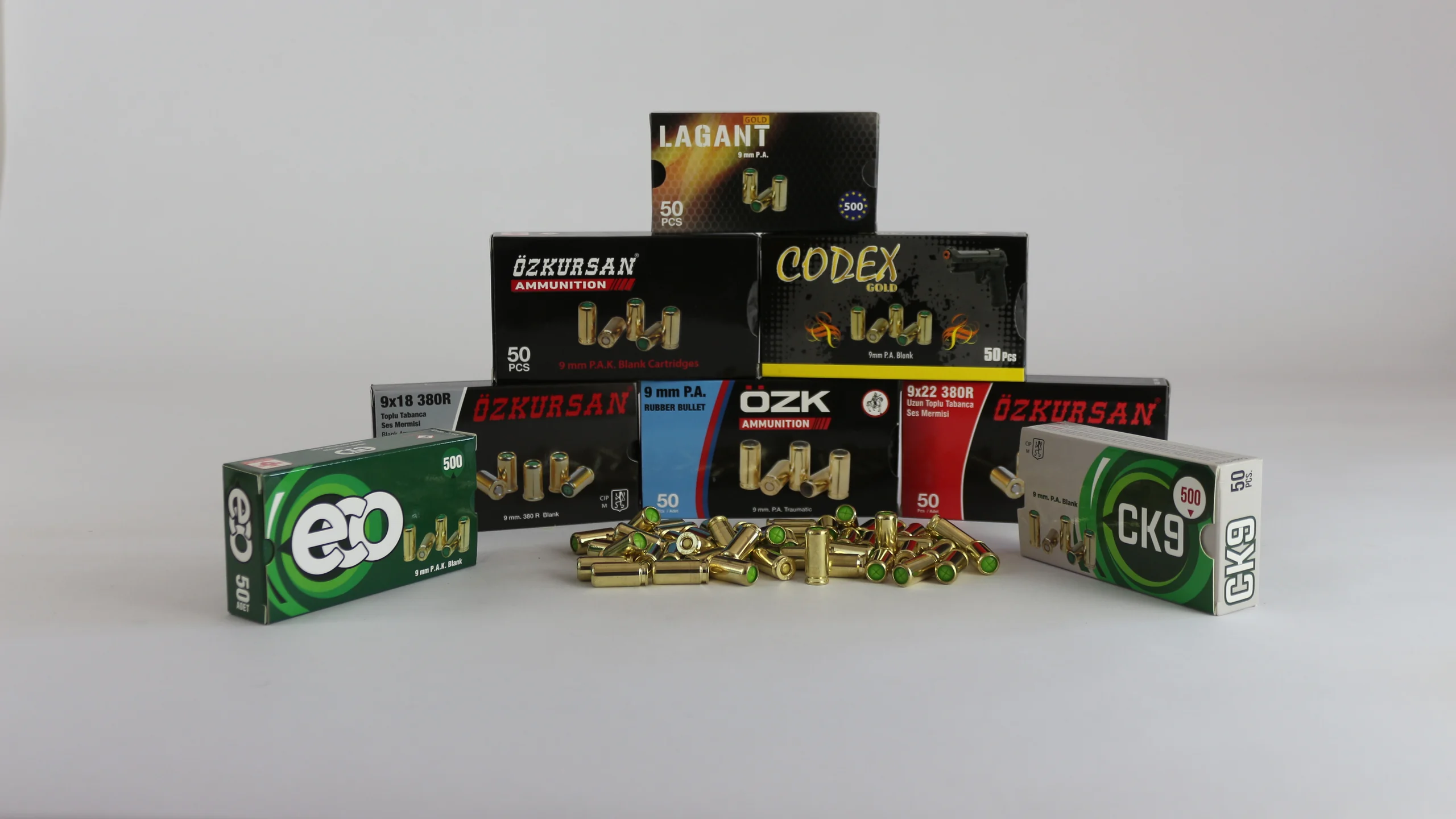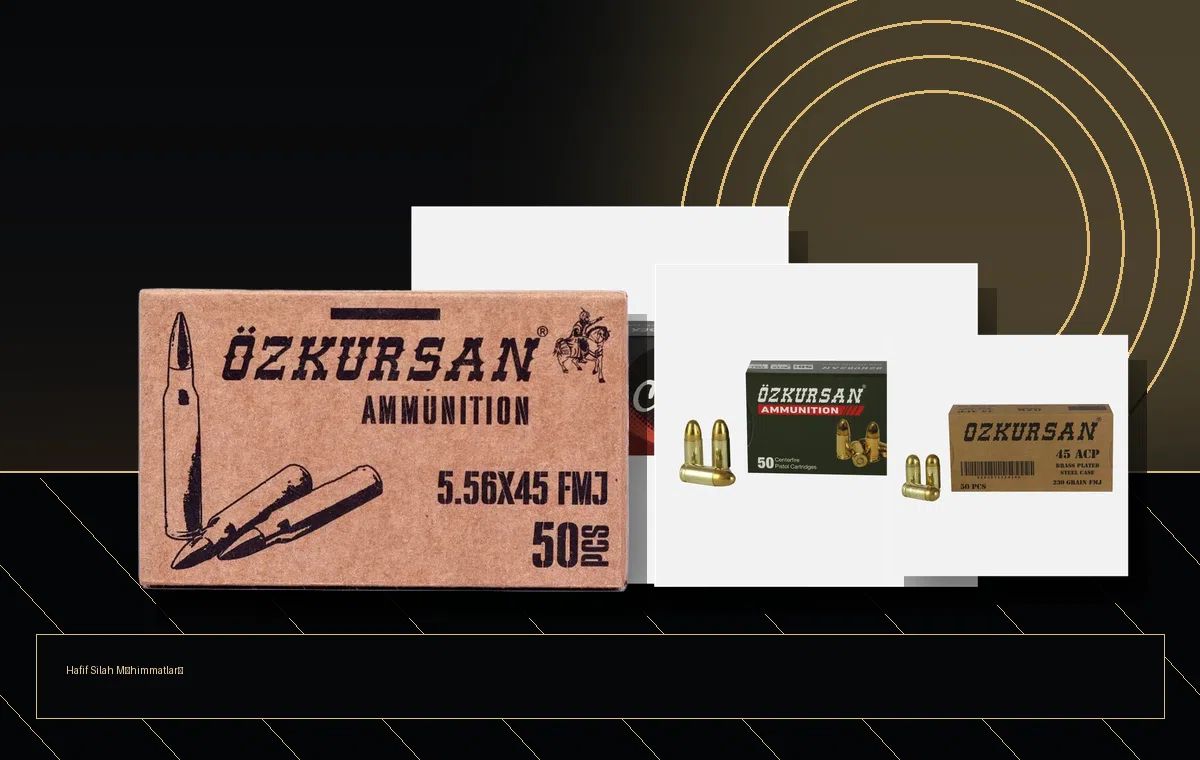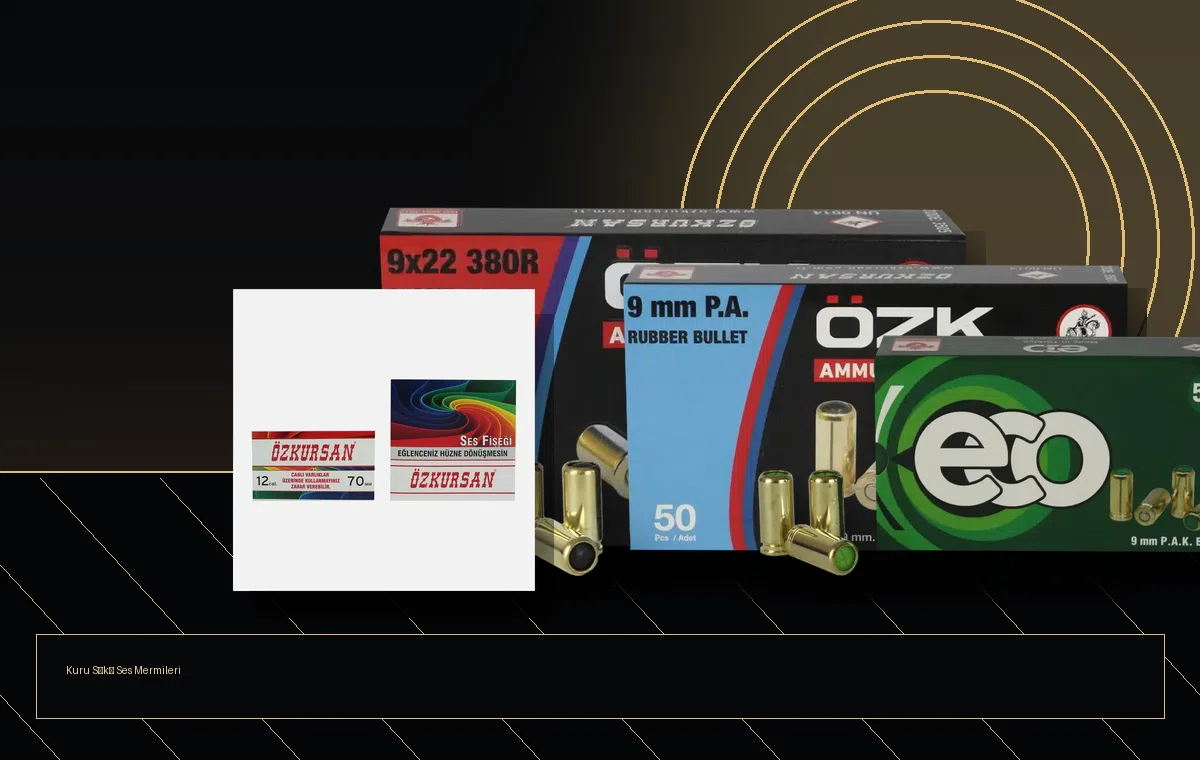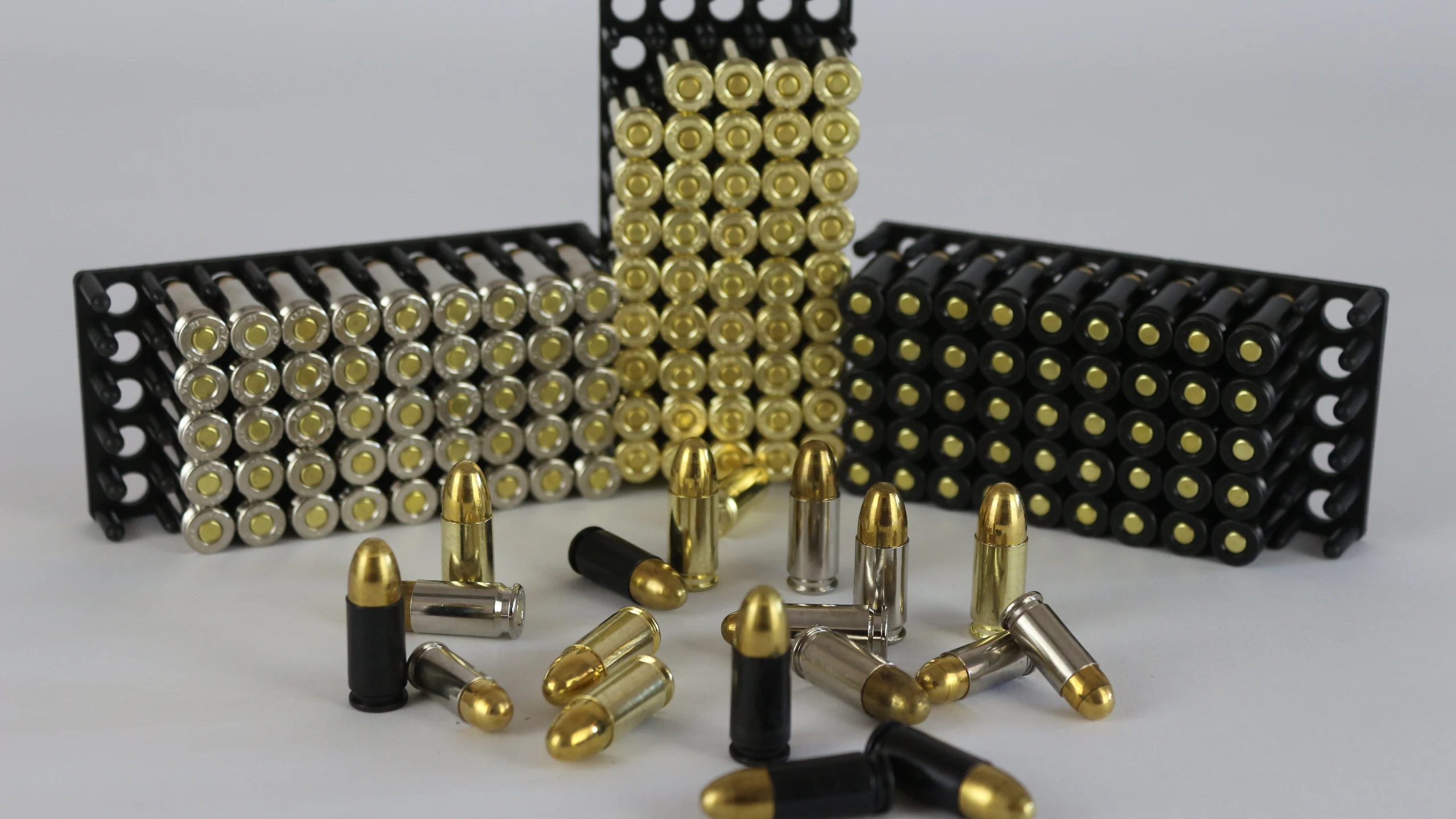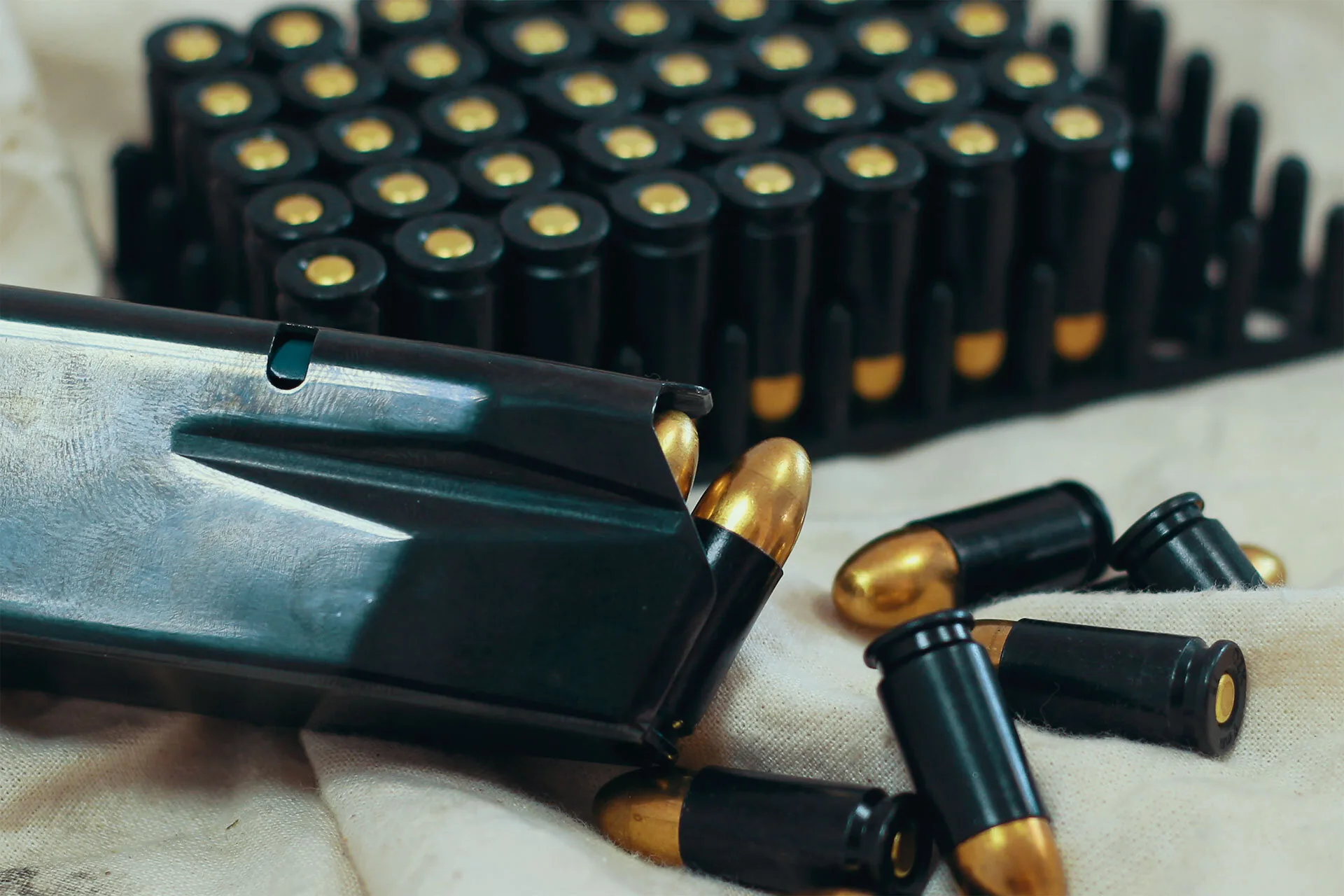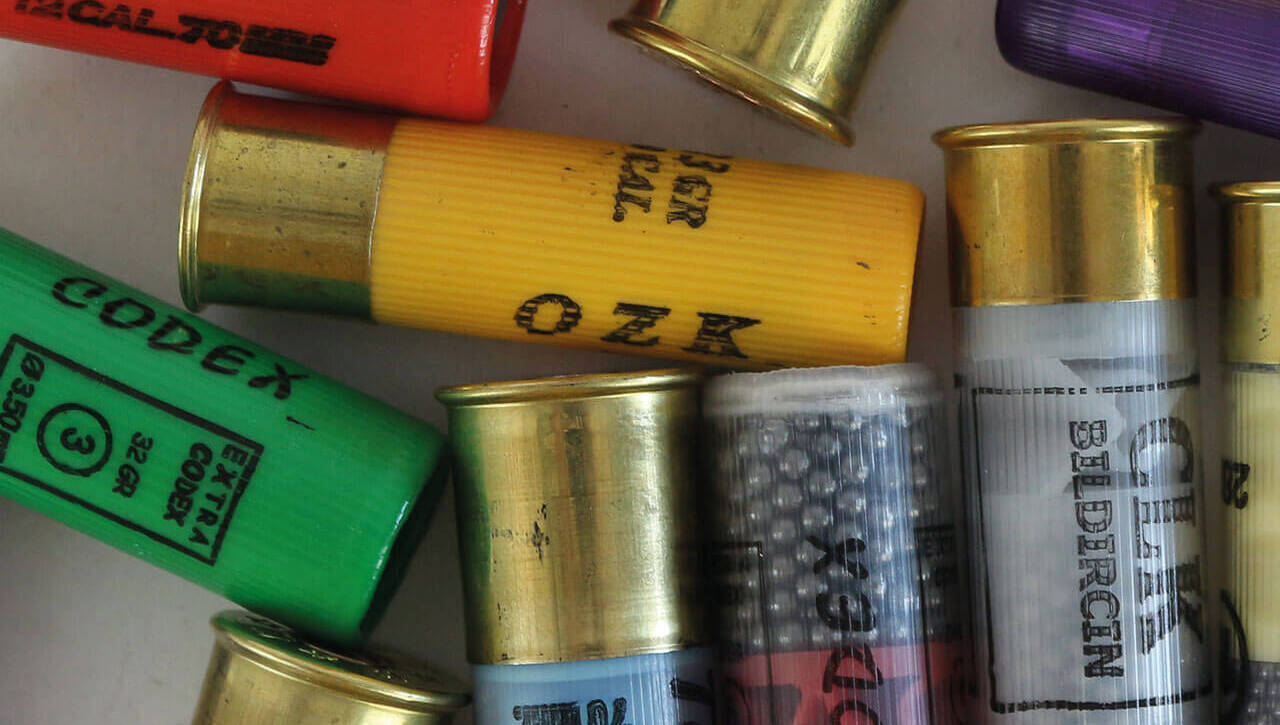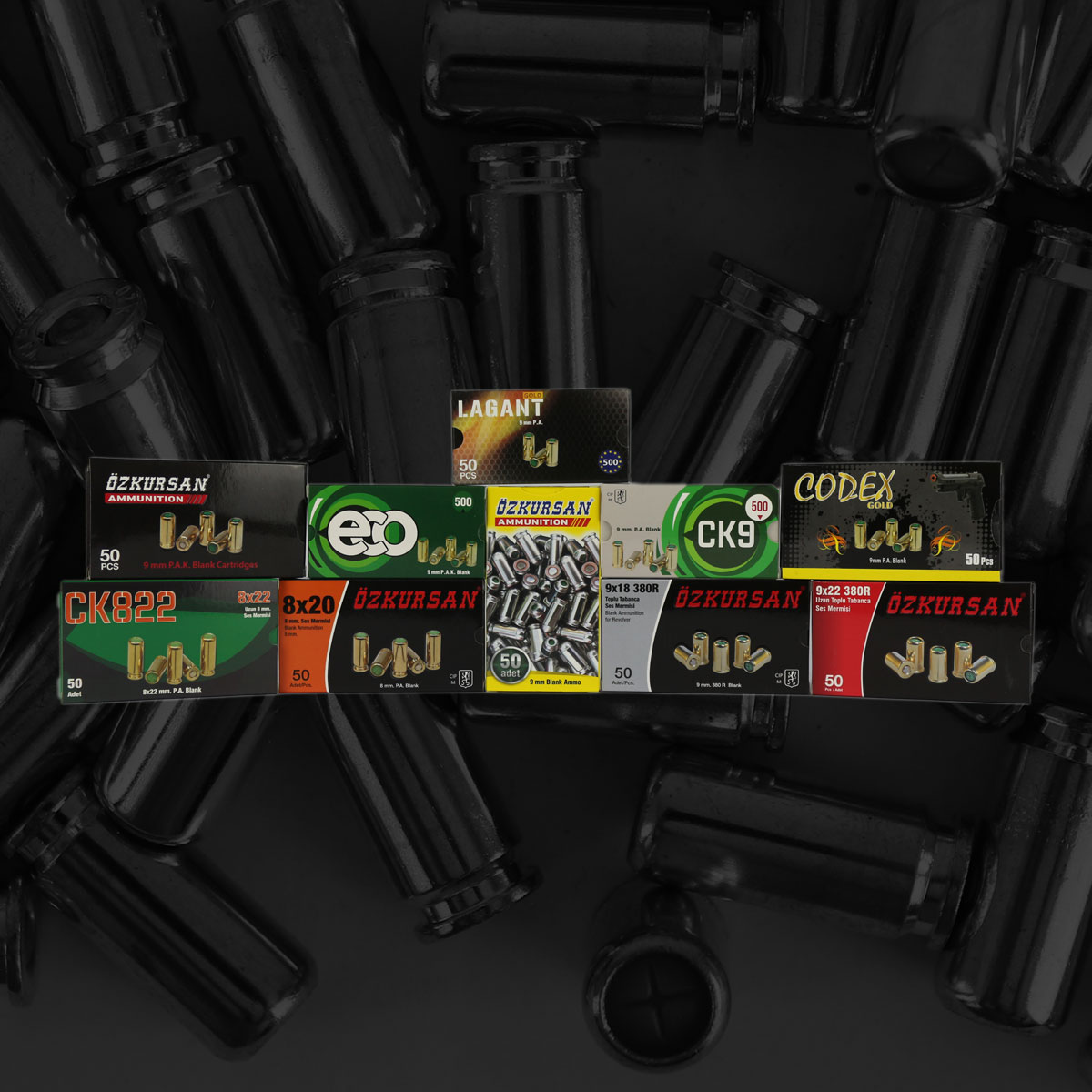
A cartridge or round is not a single piece — it is formed by four core components: bullet, case, propellant and primer. Shot-loaded hunting cartridges add a wad as a fifth element. This page explains each component with real product data from the Ozkursan catalog.
Each component comes from a different area of materials science and is quality-controlled separately during manufacturing; a cartridge's overall performance comes from how well the four parts work together, not from any single part.
1. Bullet
The bullet is the part that leaves the barrel and reaches the target. FMJ Brass is the most common bullet type in the catalog, used in products such as Ozkursan Luger; a JHP bullet is available only in Ozkursan 9x19 mm Luger.
In shot-loaded hunting cartridges the bullet is replaced by shot pellets, whose weight (in the 28-36 g range) and size vary by hunting application. The full range of projectile types is listed on Ammunition Types and Their Characteristics.
2. Case
The case is the body that holds the bullet, propellant and primer together. Three case types are used across the catalog: steel, brass and nickel/brass-plated steel. The case head, where the primer sits, is the most critical area, as it takes the first impact of firing pressure.
The distribution of case type by product is tabulated on the Cartridge Cases page; material choice directly affects manufacturing cost and feeding behaviour.
3. Primer
The primer is the small metal cup that ignites the propellant when struck by the firing pin. Every product family in the Ozkursan catalog — from pistol cartridges to blank rounds — uses a Boxer primer.
The primer sits centrally in the case head, manufactured to align precisely with the firing pin's impact point. The technical detail of the Boxer system is covered on the Boxer Primers page.
4. Propellant and Pressure
The propellant burns rapidly when ignited by the primer, producing expanding gas that drives the bullet or shot down the barrel. Propellant quantity and burn rate directly determine muzzle velocity (m/s) and case pressure (bar).
Products of the same calibre made in different weights (for example, 12-gauge 28 g versus 36 g) carry different pressure values, showing that propellant quantity is adjusted to load weight. Real velocity and pressure figures are available on the Muzzle Velocity and Pressure page.
5. A Fifth Component in Shot Cartridges: The Wad
In hunting cartridges, a wad sits between the propellant and the shot charge. Two main wad materials appear in the catalog — BIOR and POWER — with PLASTIC wads used in some slug cartridges. The wad keeps the shot charge moving evenly through the barrel and affects the pattern spread at the muzzle.
For example, BIOR wads are used for quail and woodcock loads, while POWER wads are used for wood pigeon, partridge and duck loads — a species-based breakdown available on Information About Bird Hunting Cartridges.
Component Overview Table
| Component | Function | Typical Catalog Material |
|---|---|---|
| Bullet / Shot | The part reaching the target | FMJ Brass, JHP Brass, lead shot, steel shot |
| Case | Holds the other components together | Steel, brass, plated steel |
| Primer | Initiates ignition | Boxer |
| Propellant | Produces the driving gas | Quantity varies by calibre |
| Wad (shot cartridges) | Separates shot from propellant gas | BIOR, POWER, PLASTIC |
How the Components Work Together
When the trigger is pulled, the firing pin strikes the primer, the primer ignites the propellant, and the resulting gas pressure drives the bullet or shot out of the case and down the barrel. The material and dimensions of every component in this chain directly affect the final muzzle velocity and pressure.
The full component breakdown by product type is grouped by category on the Types of Ammunition page; for a calibre-specific example, see 9x17 mm Short Ammunition.
Each component — case coil, primer compound, propellant batch, bullet alloy — passes through separate sourcing and quality-control steps under Ozkursan's ISO 9001:2015-certified quality management system, supporting consistency in the finished product; case material is also recyclable, an aspect managed under the ISO 14001:2015 environmental management certification.
Frequently Asked Questions
Which component is the most critical?
All four components are interdependent, but the primer is generally regarded as the most safety-sensitive component, since it starts the ignition chain.
Do shot cartridges have a bullet?
No — shot-loaded cartridges use many small pellets sized by shot number instead of a single bullet, separated from the propellant gas by the wad.
Is propellant quantity stated on the product label?
The catalog does not list propellant weight directly; instead it publishes the resulting muzzle velocity (m/s) and pressure (bar) values, tabulated on the Muzzle Velocity and Pressure page.
Review product categories, the catalog and corporate inquiry options for current Ozkursan information.